


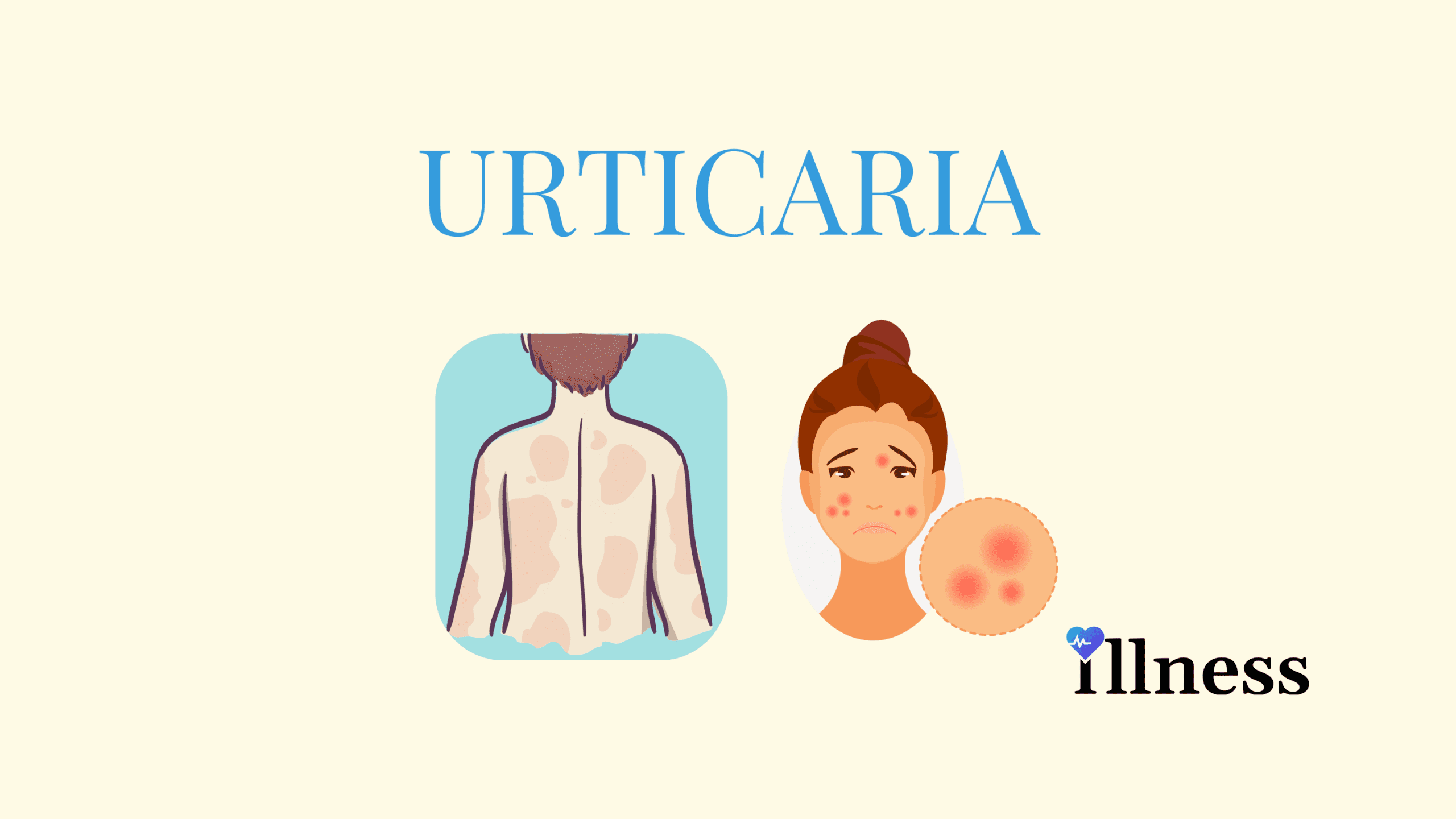
Overview Of Urticaria – Hives
Urticaria, which is is synonymous with hives, is a raised, itchy, rash on the surface of the skin that can result from an allergic reaction to food or medicine.
Commonly Associated With
Wheals; Urticaria – hives
Causes Of Urticaria – Hives
Your body releases histamine and other chemicals into the blood causing swelling, itching and other symptoms when you have an allergic reaction.
People with allergies like hay fever often get hives but often, the cause of hives is not known.
Angioedema is a swelling of the deeper tissue that sometimes occurs with hives in any part of the body.
When it occurs around the mouth, the symptoms can be severe, including airway blockage.
Hives can be triggered by many substances, including:
- Animal dander (especially cats)
- Pollen
- Shellfish, fish, nuts, eggs, milk, and other foods
- Insect bites
- Medicines
Hives may also result from:
- Emotional stress
- Extreme cold
- Extreme sun exposure
- Excessive perspiration
- Illness like lupus, other autoimmune diseases, and leukemia
- Infections such as mononucleosis
- Exercise
- Exposure to water
Symptoms Of Urticaria – Hives
Symptoms of hives may include :
- Itching
- Swelling on the skin into the red-or skin-colored welts called wheals
- Dermatographism or skin writing
Exams & Tests
Your health care provider will be able to tell if you have hives examining your skin. If you have a history of allergy-causing hives the diagnosis is clearer.
A skin biopsy or blood test can also be done to confirm if you had an allergic reaction and test for what caused the allergic response. Specific allergy testing is, however, not useful in most hives cases.
Treatment Of Urticaria – Hives
Treatment may not be needed if the hives are mild and they may disappear on their own.
To reduce itching and swelling:
- Do not take hot baths or showers.
- Do not wear tight-fitting clothing.
- Your health care provider may suggest an antihistamine such as diphenhydramine (Benadryl) or cetirizine (Zyrtec).
- Other medicines may be needed, especially if the hives are long-lasting.
If your reaction is severe, especially if swelling occurs in your throat, you may need an emergency shot of epinephrine (adrenaline) or steroids.
